
Unlocking Long-Term Weight Loss in Mobile, AL: The Power of Body Composition, VO₂ Max, and Resting Metabolic Rate Testing
Introduction
Weight loss is one thing — maintaining it is another. Many people in Mobile, AL are finding success with modern treatments like GLP-1 weight loss medications (such as semaglutide and tirzepatide). These advanced therapies can deliver incredible results.
But here’s the catch: after weight loss, the body adapts. Your metabolism can slow down, muscle mass may decrease, and without smart strategies, weight regain becomes likely. That’s why scientific testing tools like body composition analysis, VO₂ Max testing, and resting metabolic rate (RMR) testing are game-changers. At The Connexus Clinic in Mobile, AL, we use these assessments to help clients not only lose weight but keep it off for life.
This in-depth guide explains:
- What these tests are
- How each helps you understand your body better
- Why DEXA body scans are the most accurate tool for sustainable results
- How combining these metrics creates a personalized weight-loss roadmap
Part 1: Why Weight Loss is Hard to Maintain
Losing weight is already challenging, but the body fights even harder to regain lost pounds. The reasons include:
- Metabolic adaptation: After losing weight, your body burns fewer calories at rest.
- Loss of muscle mass: Quick or unstructured weight loss often reduces lean tissue.
- Decreased daily activity: A smaller body requires less energy to function.
- Psychological challenges: Without measurable accountability, habits may backslide.
This is where scientific measurements come in — helping track not just the number on the scale, but what’s really happening inside your body.
Part 2: Measuring Body Composition
What is Body Composition?
Body composition goes beyond weight. It measures your:
- Fat mass
- Lean muscle mass
- Bone density
- Visceral fat (fat around organs, linked to health risks)
Tracking body composition shows whether your weight loss is coming from fat or muscle — a critical distinction.
Common Methods of Measurement
- Skinfold Calipers
- Pinches skin at various spots to estimate fat.
- Inexpensive but highly user-dependent and less accurate.
- Bioelectrical Impedance (BIA)
- Found in smart scales and handheld devices.
- Sends weak electrical currents through the body to estimate fat vs. lean tissue.
- Convenient, but influenced by hydration and not highly precise.
- Hydrostatic Weighing (Underwater Weighing)
- Once considered the gold standard.
- Measures body density by water displacement.
- Accurate, but time-consuming and inconvenient.
- Air Displacement (BodPod)
- Uses air pressure changes to estimate fat vs. lean mass.
- Accurate, but not widely available.
- DEXA (Dual-Energy X-Ray Absorptiometry) Scan
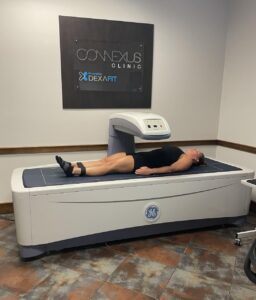
- The most accurate method available.
- Measures body fat %, lean mass, and bone density.
- Provides regional breakdown (arms, legs, trunk, visceral fat).
- Quick, painless, highly reliable.
👉 That’s why at The Connexus Clinic in Mobile, AL, we recommend DEXA scanning as the most precise way to monitor body composition during weight loss and beyond.
Part 3: VO₂ Max Testing

What is VO₂ Max?
VO₂ Max is the maximum oxygen your body can use during exercise. Higher values mean your cardiovascular system is stronger and more efficient.
Why VO₂ Max Matters for Weight Loss
- Cardio Fitness: Directly tied to endurance and fat-burning during workouts.
- Calories Burned: The higher your VO₂ Max, the more energy you burn.
- Predictor of Longevity: One of the strongest indicators of overall health.
- Personalized Training Zones: Determines optimal heart rate zones for fat-burning and fitness gains.
For those using GLP-1 medications, VO₂ Max testing helps design workouts that preserve muscle mass and maximize fat loss long-term.
Part 4: Resting Metabolic Rate (RMR) Testing
What is RMR?
Resting Metabolic Rate is the number of calories your body needs at rest just to function (breathing, circulating blood, repairing cells).
Why RMR is Crucial During Weight Loss
- Identifies Metabolic Slowdown: Weight loss often causes your RMR to drop. Testing catches it early.
- Customizes Nutrition: Knowing your RMR empowers tailored calorie planning that avoids overeating or undereating.
- Sustains Weight Loss: By adjusting food intake and exercise as your metabolism changes, you protect results after GLP-1 therapy.
At The Connexus Clinic, we use state-of-the-art metabolic testing to give each client their unique calorie blueprint.
Part 5: Putting It All Together
When you combine these three powerful tools, you unlock a personalized strategy for lifelong success:
- DEXA → tracks fat vs. muscle changes with unmatched accuracy.
- VO₂ Max → identifies how to exercise smarter, not harder.
- RMR → pinpoints your individual calorie needs.
This trio creates a data-driven roadmap that makes weight loss in Mobile, AL more predictable, sustainable, and effective.
Part 6: The Connexus Clinic Difference in Mobile, AL
At The Connexus Clinic, we go beyond standard weight-loss programs. Our medically supervised approach includes:
- Advanced DEXA body composition scanning
- VO₂ Max performance testing
- Resting Metabolic Rate analysis
- Personalized coaching tailored to each client’s body and goals
Whether you’re just beginning your journey or maintaining results after GLP-1 therapy, our clinic provides the tools and support to keep you on track.
Part 7: Take Action Today
If you’re searching for weight loss solutions in Mobile, AL, don’t settle for generic diet plans or one-size-fits-all programs. Science-backed testing and personalized strategies can help you achieve lasting change.
📍 Ready to transform your health?
Schedule your comprehensive testing session with The Connexus Clinic in Mobile, AL today.
Conclusion
Weight loss isn’t just about the scale — it’s about changing what’s happening inside your body. By measuring body composition, VO₂ Max, and resting metabolic rate, you gain the knowledge to not only lose weight but keep it off permanently.
At The Connexus Clinic in Mobile, AL, we empower you to take control of your health with precision testing and individualized care.